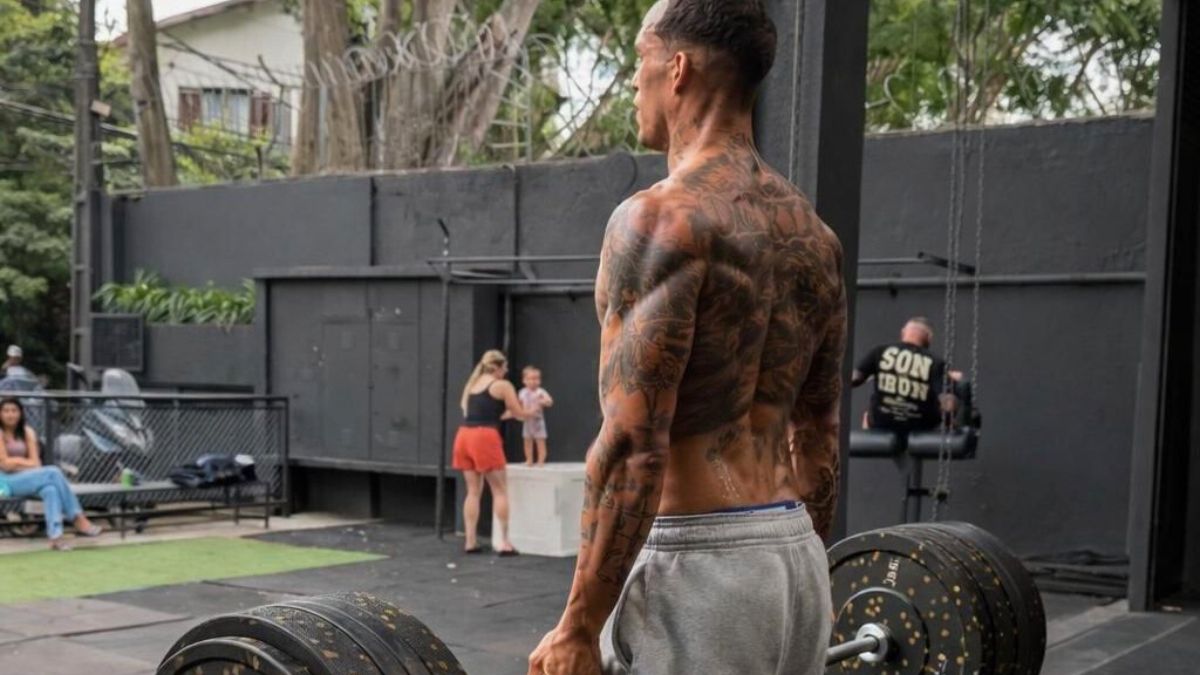
Image belongs to @CharlesDoBronxs – used for journalistic purposes only, no copyright infringement intended.
Charles Oliveira’s ongoing transformation has dominated the buildup to his BMF title fight against Max Holloway at UFC 326 on March 7, as new training camp images reveal a level of conditioning not previously seen from the former lightweight champion.
Oliveira, 36, enters the rematch at T-Mobile Arena in visibly shredded form, with recent photos highlighting increased muscle definition and a leaner frame. This evolution has become a talking point throughout fight circles, with images of his midsection and arms generating discussion both online and among industry observers. Despite speculation over potential digital manipulation or dehydration tactics, no credible evidence has surfaced challenging the authenticity of the visuals.
💪#UFC326 pic.twitter.com/O1cqneF2FD
— Charles 'DoBronxs' Oliveira (@CharlesDoBronxs) February 12, 2026
The renewed focus on physical preparation comes as Oliveira seeks redemption and relevance following an up-and-down spell. His decisive second-round submission of Mateusz Gamrot last October served as a return to form after a TKO defeat to Ilia Topuria earlier in 2025. The adjustments to his regimen, targeting both strength and durability, appear crafted in anticipation of Holloway’s relentless pressure and stamina.
Holloway, meanwhile, carries confidence as the reigning BMF titleholder, entering off a unanimous decision victory over Dustin Poirier at UFC 318. Now fully settled at lightweight, Holloway’s own camp has placed strategic emphasis on grappling, recognizing Oliveira’s continued threat on the ground.
Their rematch is layered with over a decade of history. In 2015, their initial meeting ended prematurely in the first round due to a rare injury to Oliveira’s neck or esophagus, the details of which remain unclear to this day. The anticlimactic finish left questions unanswered and has fueled interest in what a full contest between the two might reveal.
Both athletes have refined their styles since. Oliveira, at 36-11, carries a reputation for world-class submissions and sharpening stand-up. Holloway’s relentless striking output made him a standout at featherweight before his recent run at 155 pounds, where he continues to adapt his approach for new elite competition.
UFC 326 stands out not only for the matchup and the high-profile BMF distinction, but also as the organization’s broadcast premiere on CBS, giving each storyline added visibility. The attention on Oliveira’s camp in particular has intensified, with carefully managed imagery signaling both discipline and hunger, pointing clearly toward closure for previous setbacks. Training content from Oliveira’s gym has been curated to emphasize these messages, though critics persist in questioning the honesty of camp portrayals, scrutiny that typically follows fighters in main events of this stature.
For both men, this second bout is shaped as much by what occurred outside the Octagon as in it. Years spent evolving technically and physically, and moving between divisions, feed into the narrative threads of improvement and redemption. Their trajectories since the first fight suggest little remaining in common, save for a mutual desire to validate their adaptation on the sport’s biggest stage.
As tension builds toward fight week, attention will remain fixed on Oliveira’s physique and the substance behind the form. Public focus now pivots to whether this transformation will translate into improved performance, cardio, and resilience under pressure. Conversely, Holloway aims to prove his own evolution is sufficient to resist the Brazilian’s revamped approach while adding to his own growing legacy at lightweight.
With the UFC’s move to network primetime, the Oliveira-Holloway bout has drawn the kind of scrutiny and speculation appropriate to its context. Whether the headlines about Oliveira’s transformation become footnotes or difference-makers will be seen soon enough inside the Octagon.