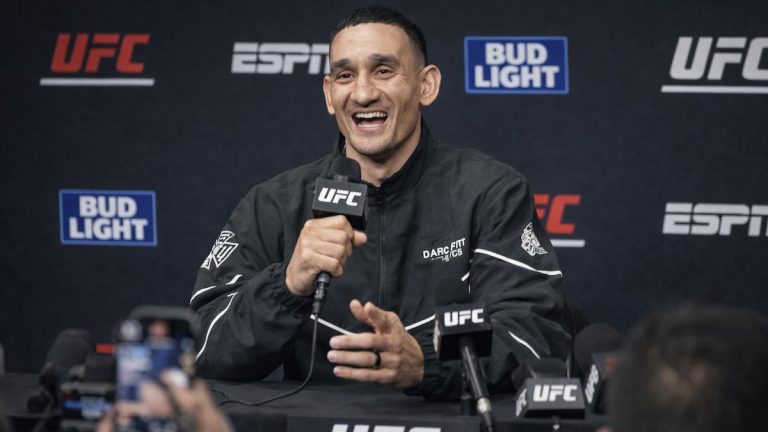
Max Holloway does not often talk business in public, but he made an exception on Demetrious Johnson’s YouTube channel, and what he said touched on something that has been building inside the sport for a long time.
The BMF champion used the appearance to address fighter pay directly, pointing to the reported $15 million purse that Conor Benn is set to receive for his Zuffa Boxing debut as a reference point for what UFC fighters should be measuring themselves against.
Benn, the unbeaten British welterweight (24-1), has signed with Zuffa Boxing to face former super lightweight champion Regis Prograis on April 26. Boxing reporter Dan Rafael put the deal at $15 million for a single fight, though the figure has not been officially confirmed. TKO Group Holdings president and COO Mark Shapiro addressed it carefully during a quarterly financial call.
“I’m not confirming or denying,” Shapiro said, before clarifying that any payment to Benn would not come out of TKO’s pocket. “Sela, led by our great partner Turki Alalshikh, is covering the purse.”
Zuffa Boxing is a joint venture between TKO, the UFC’s parent company, and SELA, the Saudi Arabia-based entertainment organization. Shapiro confirmed Benn’s arrangement is structured as a one-fight deal. Before the signing, Benn had been with Matchroom Boxing under Eddie Hearn, most recently defeating Chris Eubank Jr. in front of a sold-out Tottenham Hotspur Stadium in November. Hearn did not hide his reaction to losing the fighter, describing it as “very surprising, very painful.”
For Holloway, the Benn figure was less about boxing and more about what it tells UFC fighters about their own negotiating position.
“Know your worth, know what it is,” Holloway said. “It’s going to suck. At the end of the day, hold your ground. You should know what your worth is. There’s this thing that I like to tell myself in any type of business, not only fighting, anything, even in regular job people: if you’re going to present something and I tell you, ‘Oh, I want this much.’ And your answer to me is like, ‘Oh, perfect. Can do.’ You low bought the shit out of yourself.”
WATCH:
Holloway is not speaking from a position of ignorance on the subject. When he made his UFC debut against Dustin Poirier in 2012, his disclosed purse was $6,000 on a preliminary card. He has gone 27-8 overall since, became a two-time featherweight champion, and is now headlining UFC 326 against Charles Oliveira for the BMF title on the same weekend Benn fights for Zuffa Boxing.
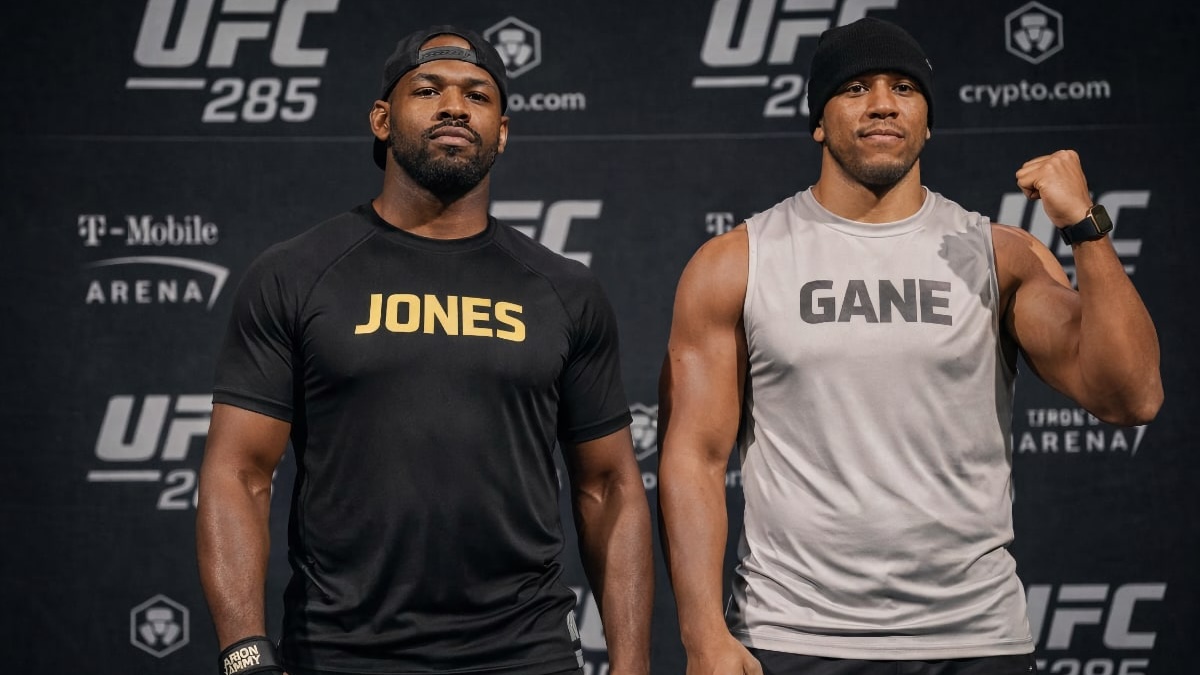
A large part of Holloway’s argument centered on an episode from 2021 involving Jon Jones and Derrick Lewis. Jones had pushed back against fighting Francis Ngannou, with reports placing his compensation demands around $10 million. Lewis publicly indicated he would accept the fight for far less. In Holloway’s view, that kind of public undercutting is exactly what keeps fighter pay stagnant across the board.
“You needed to almost stand in Jon’s corner, be like, ‘Yeah, Jon, you deserve 10. Go get that 10,'” Holloway said. “Because guess what? If you’re fighting for 10, your base pay probably comes up too.”
Holloway also pointed to Francis Ngannou’s departure from the UFC as a cautionary example. When Ngannou’s contract expired, he sought improved terms, the UFC declined, and he left. Holloway’s point was straightforward: fighters negotiating in isolation tend to lose.
The collective theme was reinforced by Johnson himself, who shared advice he had received from Georges St-Pierre.
“He doesn’t follow the sport like he used to, but he sees big headlines that come up, and he says, fighters are always putting other fighters down,” Johnson said. “Like you said, you need to come together, you need to band together.”
Other fighters have been equally vocal in the wake of the Benn deal. Sean O’Malley, the former bantamweight champion, questioned the figure while acknowledging the frustration it represents.
“If they really paid this Conor Benn guy $15 million, it’s crazy how you can just put in so much work in the UFC, build this name, create this character, be this star, and I’m not making $15 million a fight,” O’Malley said.
Michael Page, who made the jump from Bellator to the UFC, framed it around fighters at all levels.
“I hate hearing stories of fighters getting to what is the pinnacle of their career, in terms of the UFC, and still being broke. That just shouldn’t exist,” Page said.
Sean Strickland was more blunt about where the UFC sits compared to other major sports.
“As far as the pay scale compared to any other sporting event, the UFC is the most f–ked up. If you compare athlete pay versus what they’re making, there is no argument there. It’s not fair,” Strickland said. He also warned that the gap between what top MMA fighters earn and what athletes in other sports command could push American talent away from the sport.
The structural context around all of this is significant. In 2024, the UFC agreed to a $375 million settlement following a class action antitrust lawsuit that alleged fighters had historically received just 13 to 20 percent of revenue, compared to the 50 percent or more standard in major team sports leagues. A second antitrust lawsuit, Johnson vs. Zuffa, remains active and continues to allege the UFC suppressed fighter compensation. Boxing, by contrast, benefits from a competitive marketplace and is protected by the Muhammad Ali Boxing Reform Act, federal legislation offering professional boxers legal safeguards against exploitative contract terms. The UFC is reportedly lobbying to amend that same law.
Holloway acknowledged the structural grip the UFC holds on MMA, noting there is no real competitive alternative in the sport.
“[UFC’s] got [the industry] in a clinch-hold, right? There is ONE [Championship], but that’s just a whole different thing. ONE has its hand in everything,” Holloway said.
At the same time, he pointed to the current moment as an opening. The UFC recently signed a seven-year, $7.7 billion broadcast deal with Paramount+, which has already resulted in performance bonuses rising to $100,000 and a new $25,000 incentive tied to every finish. Holloway sees the deal as leverage fighters can actually use, but only if they act on it together.
“With this Paramount deal, hopefully, fighters can start getting together and being smart and sticking their necks out, even the lower fighters,” Holloway said.
UFC 326 takes place March 7 at T-Mobile Arena in Las Vegas.