Understanding how to become a great MMA fighter is more than just drilling a technique. Technique counts for a lot, but there are also entire muscle groups in your body which are responsible for allowing you to fight.
If you know your anatomy a bit better and which muscles are used in each strike, you’ll be able to identify muscles to focus your strength and conditioning on. And with this new knowledge, you could see your fight game improve ten-fold.
So what are the best muscles for fighting?
Every fighter should focus on building muscle groups that allow them to generate torque power like kicks and punches by growing strength in the legs, hips, and core. They should also improve their muscles resistance to stress so they can take hits and continue fighting easier.
Table of Contents
Muscle anatomy of a fighter
First we should take a look at the overall anatomy of muscles and the parts they play in fighting.
If you know the muscles worked for particular fight movements, then you’re likely to become a lot better at conditioning them for power and efficiency gains.
The Core & Lower Back
Lower Legs
Hips
Upper Back
There are a bunch of muscles in the back that allow a fighter to generate a lot of their power and snap speed.
At the surface are the superficial muscles which is most of what you will visible see on the back of a fighter.
Such as the trapezius is one of the visible largest parts of the back as it runs from the upper neck, into the shoulders and across the largest part of the back and even down into the middle of the spine:
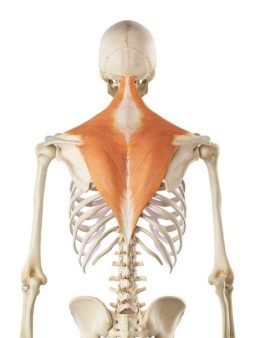
What is the trapezius used for? The trapezius is used for a lot of postural control in the body. It keeps you standing tall and your neck and shoulders where they need to be. It also controls a lot of head, shoulder and internal arm movement. So for a fighter, the trapezius gives you the ability to use your shoulders to defend (think about the philly shell), move your head quickly and even guide your punches.